
他の
Large-Size HVAC Heat Exchanger Helium Leak Testing: Design Essentials of Large Vacuum Chamber Solutions (With HCTE 2m-Class Chamber Case)
Large-Size HVAC Heat Exchanger Helium Leak Testing: Design Essentials of Large Vacuum Chamber Solutions (With HCTE 2m-Class Chamber Case) Oct 07, 2026

In the HVAC&R industry, leak testing of large heat exchangers, evaporators and condensers has long been a production challenge. Large workpieces with dozens of meters of weld seams and distributed leak points make traditional sniffer methods slow, operator-dependent and prone to missed defects, while water immersion only delivers qualitative results. In recent years, large-chamber vacuum helium leak testing has become the mainstream final inspection solution for large refrigeration components.

Based on the recently delivered 2-meter-class vacuum chamber helium leak test system by HCTE, this article breaks down the core technical points and design logic of large-workpiece helium leak testing.

4 Core Technical Challenges of Large-Chamber Helium Testing
  1. Pumping efficiency bottleneck: Larger chamber volume means longer time to reach target vacuum, directly reducing line throughput
  2. High helium operating cost: Large volume requires more helium charge; without recovery, per-part helium cost is multiple times that of small workpieces
  3. Slow background clearance: Residual helium in the chamber after testing is high; insufficient purging causes elevated background for the next part, leading to false positives
  4. Tooling sealing difficulty: Heat exchangers have multiple ports and irregular geometry; generic fixtures cannot ensure reliable sealing at all interfaces
Targeted Solutions in HCTE Large-Chamber Systems

For the large-size characteristics of HVAC heat exchangers, HCTE adopted a layered optimization design approach in the project:

  • Stage vacuum pumping architecture: Combination of main roughing pump + holding pump, achieving fast pump-down in rough stage and stable vacuum in fine stage, balancing pumping speed and ultimate vacuum to significantly reduce cycle time
  • Automatic helium recovery and purge system: Standard auto helium clearing function actively recovers helium after testing, then purges with nitrogen. This reduces helium consumption and avoids prolonged high-concentration helium impact on the detector filament, effectively extending equipment service life
  • Custom profile tooling: Dedicated sealing connectors and support positioning mechanisms designed for heat exchanger tube sheets and headers, delivering reliable sealing and quick changeover
  • System-level accuracy assurance: Overall detection limit reaches 5×10⁻⁷ Pa·m³/s (~1g/year refrigerant leak rate), fully meeting sealing requirements for export refrigeration products
Project Implementation

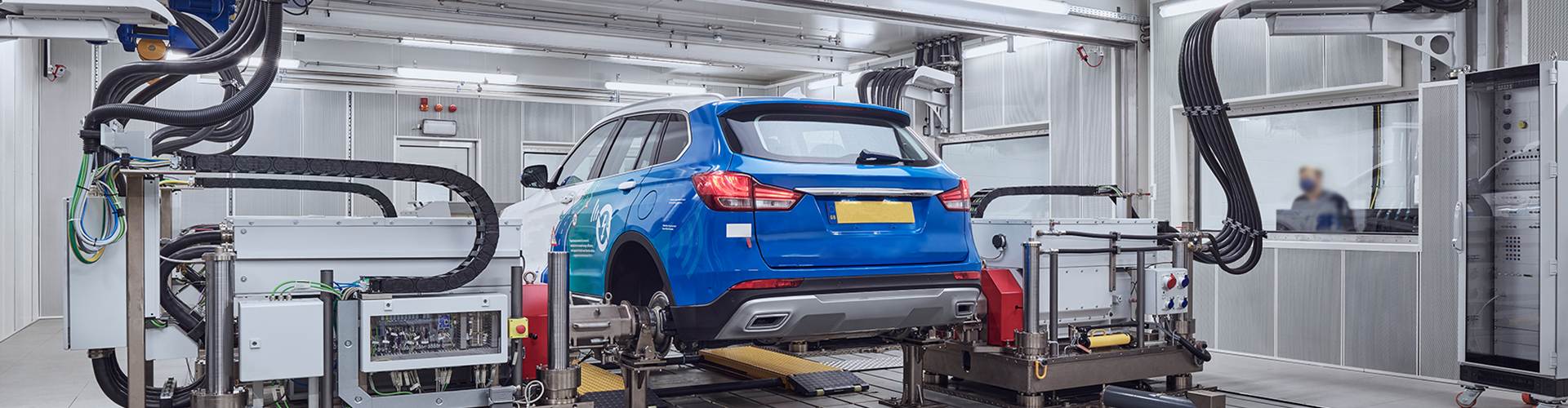
HCTE customized this large heat exchanger helium test system for a leading Chinese refrigeration manufacturer. With a chamber size of 2m × 2.5m × 1.3m, it is one of the largest vacuum chamber systems of its kind in China. The system features modular design with independent vacuum, detection and control units for easy maintenance and upgrade. Now stably operating at the customer’s factory, it delivers a full test cycle under 8 minutes per workpiece with ≤±5% repeatability, helping the customer reduce out-of-box leak defects by 85%.

Selection tip: For refrigeration components over 1m in maximum dimension, prioritize vendors with large-chamber customization experience. When standard chambers cannot fit, custom-sized chambers deliver far better long-term value than forcing ill-fitting tooling.

:
実験室試験装置および生産ライン試験システムの研究開発、製造および販売に取り組んでいます
無料見積もりを取得

伝言を残す

伝言を残す
当社の製品に興味があり、詳細を知りたい場合は、ここにメッセージを残してください。できるだけ早く返信します。
家

製品

whatsApp